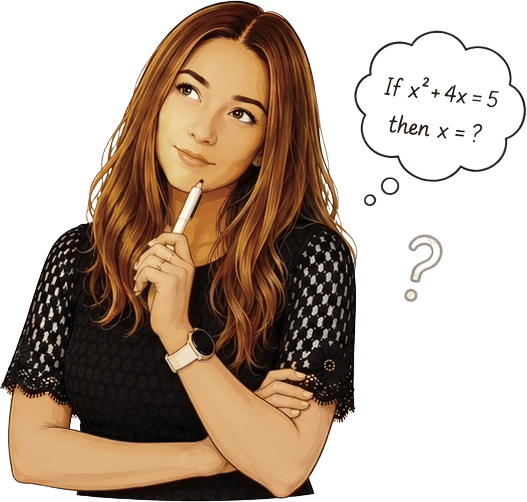
Understanding the foundation and higher tiers in GCSE Maths
When your child approaches their GCSE Maths exams, one of the first important decisions is whether they will sit the foundation or higher tier paper. This choice profoundly shapes the content they study, the style of questions they will face, and the grades they can achieve. Understanding this distinction early can really help you support your child with tailored revision strategies and calm reassurance throughout their preparation journey. Being well-informed equips you to help set realistic goals, manage expectations, and celebrate progress at every step.
The foundation tier covers grades 1 to 5 and aims to build solid knowledge of essential Maths topics through accessible exam questions. It primarily focuses on fundamental concepts, reinforcing skills your child will use in real-life applications, such as percentages, basic algebra, and geometry involving shapes, measurement, and straightforward data handling. These topics lay an important groundwork without overwhelming students with abstract or complex concepts.
By contrast, the higher tier challenges students with more demanding topics and question types, offering grades 4 to 9. This tier covers everything on the foundation syllabus plus advanced areas such as quadratic equations, trigonometry, algebraic manipulation, and problem-solving that requires logical reasoning beyond routine procedures. It encourages your child to develop deeper mathematical understanding and confidence in tackling multi-step questions.
Both tiers have unique benefits depending on your child1s current strengths, confidence level, and school guidance. For example, a student who has a strong grasp of core topics but lacks self-belief might benefit from foundation papers to build momentum safely, whereas a student aiming for top grades should prepare for the higher tier to unlock those possibilities and stretch their skills.
As parents, it1s vital to understand this tier system so you can provide calm, practical support as your child prepares. Helping them feel confident with their tier and what to expect reduces exam stress and sets the stage for a positive and productive revision journey. Familiarity with each tier1s syllabus enables you to set realistic expectations while recognising and celebrating your child1s progress, regardless of their target grade.
If you1re interested in how structured online Maths tutoring can fit into your child1s revision plan, I would be happy to discuss tailored support options that focus on building both knowledge and confidence, regardless of their tier choice.
Key differences between foundation and higher tiers
The foundation tier focuses on core Maths skills including arithmetic, basic algebra, geometry, and data handling. Questions tend to be more straightforward, with opportunities to collect marks through methodical steps on familiar problem types. Foundational papers avoid topics such as advanced algebraic manipulation or calculus, which are exclusive to higher tier exams.
For instance, a foundation question might ask your child to calculate the area of a rectangle or solve a simple linear equation like x + 5 = 12, whereas the higher tier could include topics such as expanding and factorising quadratics or solving simultaneous equations — problems that combine multiple concepts and require logical reasoning skills.
Higher tier exams include all foundation topics plus more complex areas such as quadratic equations, trigonometry, higher-level fractions and percentages, and occasionally elements of basic calculus depending on the exam board. The questions often require multi-step problem-solving and mathematical reasoning, combining different topic areas.
Because both tiers have overlapping content but different question difficulties, students who choose higher tier can achieve top grades 7 to 9, while foundation tests cap at grade 5. It1s worth noting that higher tier exams typically begin with questions similar to the foundation level to allow students to build confidence before progressing to more challenging ones.
Despite this overlap, higher tier questions can feel intimidating if your child1s core understanding and exam confidence aren1t solid. This highlights the importance of revisiting fundamental skills regularly, even for higher tier students, to ensure a strong base before tackling advanced topics.
Examples to illustrate tier differences
- Topic 1 Algebra: Foundation tier may ask to simplify expressions like 3x + 2x or solve linear equations such as x + 7 = 12, while higher tier can include solving quadratic equations like x2 + 5x + 6 = 0 using factorisation or the quadratic formula.
- Topic 1 Geometry: Foundation might involve calculating the area and perimeter of basic shapes such as rectangles and triangles, whereas higher tier includes more advanced work on circle theorems, angle properties, and calculating lengths and angles using trigonometry.
- Topic 1 Data Handling: Foundation questions cover reading bar charts, calculating mean and mode, while higher tier may require interpreting cumulative frequency graphs or using probability rules involving combinations.
- Topic 1 Number: Foundation focuses on basic fractions, decimals and percentages conversion. Higher tier extends to work with surds, indices, and standard form calculations.
Why tier choice matters for your child1s learning and confidence
The tier your child sits determines not just the exam content but also their revision focus and the style of questions they should practise. Knowing which tier they will take allows you and any tutors or teachers involved to plan revision that specifically targets appropriate topics and question difficulty. This focused approach ensures that the time and effort spent truly impact your child1s exam performance.
If a student attempts the higher tier without enough confidence and mastery of foundational skills, they may struggle during exams and feel overwhelmed, which can undermine their self-esteem and create negative stress cycles. Conversely, foundation tier students who find the work too easy might miss opportunities to develop skills that would allow them to achieve higher grades and open further educational or career pathways.
Therefore, building a steady balance of confidence, topic mastery, and exam technique is key for exam success. Parents can play an important role by encouraging regular, tier-appropriate practice and celebrating progress—even when tackling tricky topics. Noticing and acknowledging small wins helps motivate your child and reduces exam anxiety.
Consistency with revision and positive reinforcement enhance engagement and memory retention. It1s helpful to remind your child that making mistakes is an essential part of learning every error is an opportunity to deepen understanding and improve.
Supporting your child with tier-appropriate revision at home
Clear revision planning helps your child feel in control of their study schedule. Break down their revision into manageable chunks focused around their specific tier syllabus points. For example, assign specific topics such as fractions or quadratic equations, followed by sets of related exam-style questions for practice.
Encourage regular practice of exam-style questions and worked examples to build confidence. Repeated exposure to exam question styles reduces surprises on exam day and improves pacing under timed conditions. Once your child has a solid grasp on a topic, simulating exam conditions by timing practice papers can be especially beneficial to boost preparedness.
Using tier-appropriate GCSE Maths tutoring can provide expert guidance tailored to your child1s needs. A tutor helps clarify difficult topics, demonstrates efficient exam techniques, and transforms understanding into exam-ready skills. Tutors also identify knowledge gaps that may not be apparent in school lessons or self-study.
At home, you can support your child by setting realistic weekly revision goals, providing a quiet study space free from distractions, and encouraging them to ask for help when a topic feels challenging. Avoid overwhelming your child with too much material at once; steady, consistent progress is much more effective than last-minute cramming, which can lead to frustration and burnout.
Encourage your child to balance revision with other activities that support mental wellbeing. Physical exercise, hobbies, social time, and sufficient rest are essential to keep focus sharp during study sessions and to maintain motivation.
Effective revision habits and exam preparation tips
- Create a revision timetable: Allocate specific times for each Maths topic, interspersed with short breaks to prevent fatigue and maintain concentration.
- Active learning techniques: Encourage your child to write notes in their own words, explain concepts aloud, or teach a sibling or friend. These methods deepen understanding more effectively than passive reading.
- Practice past papers: Use past exam papers specifically from your child1s tier to become familiar with question formats, typical wording, and time management.
- Review errors carefully: After practice tests, work through mistakes together and revisit those topics to ensure similar errors are not repeated.
- Focus on exam technique: Teach your child strategies such as reading the entire question carefully, underlining keywords, breaking down multi-part problems, and planning answers, especially for longer problem-solving questions.
- Build resilience: Encourage a positive mindset where setbacks are seen as learning opportunities instead of failures, helping your child develop confidence and persistence.
- Use formula sheets wisely: Familiarise your child with the formulae provided in exams so they can quickly locate and apply them under pressure.
Common exam mistakes to watch for
- Misreading the question or missing critical details, leading to incorrect answers.
- Skipping steps in working out, which can result in loss of method marks even if the final answer is incorrect.
- Calculation errors caused by rushing or insufficient checking of answers.
- Avoiding harder questions due to lack of confidence, missing valuable grade opportunities.
- Using incorrect formulae or mixing up formulas from different topic areas.
- Poor time management, resulting in incomplete papers or rushed answers at the end.
Parents can gently remind their children to take their time checking answers, write clear working, and attempt every question, as partial credit is often awarded. Encouraging neat presentation and the use of spare rough paper can help your child track their thought process more effectively.
Choosing suitable revision resources
- Obtain revision guides and workbooks labelled specifically for your child1s exam board and tier, such as Edexcel Foundation or OCR Higher. These resources target relevant content aligned with exam requirements.
- Encourage practice using past papers specifically from your child1s tier and exam board to build familiarity with the language, format, and style of questions.
- Use online videos or interactive tools for visual and auditory explanations, but complement watching with active practice through worked examples and note-making. Passive viewing alone doesn1t develop problem-solving skills effectively.
- Check out resources like the MathsWithSophie videos, which provide clear topic explanations for both tiers and supplement tutoring and independent study.
- Explore free official exam board websites, as they frequently provide exemplar materials, formulae sheets, and practice questions that reflect current exam standards.
Helping your child build exam confidence without pressure
Many parents worry about adding pressure during revision, especially if your child experiences anxiety about Maths. Creating a positive, supportive environment where mistakes are accepted as part of learning is vital. Remind your child that progress comes from effort and persistence, not just innate ability or talent.
Encourage your child to focus on understanding topics step-by-step and to view exams as an opportunity to show their progress and skills rather than a pass/fail test of their worth. Regular revision paired with regular breaks and positive reinforcement is proven to help build resilience and reduce exam stress.
Maintain open communication by asking how your child feels about their revision and exam preparation, listening carefully without rushing to fix everything immediately. Sometimes just knowing you are supportive and available eases anxiety and fosters a growth mindset.
If exam nerves are a concern, techniques such as visualisation, breathing exercises, or practicing exam strategies can help calm stress and improve focus both during preparation and on the exam day. For example, asking your child to imagine a calm and organised exam scenario prior to sitting the paper can mentally prepare the mind for success.
Practicing mindfulness or short meditation sessions can also help regulate emotions effectively. Encourage your child to keep a positive mantra such as "I am prepared and I can do this" to boost self-assurance.
Practical steps to support your child's tier preparation
- Confirm your child1s school tier choice and understand any flexibility to change before entry deadlines. Some schools allow a change of tier in Year 11 if progress suggests a different pathway is more suitable.
- Obtain and review tier-specific revision materials to be clear on the syllabus points that require focus. This familiarity helps avoid broad, unfocused revision and ensures targeted practice.
- Create a weekly revision timetable balancing school work, tutoring, practice papers, and rest. Flexibility within the timetable is important, but overall consistency matters most.
- Encourage your child to keep a revision diary or progress log to track topics mastered and those requiring further work. Reflecting on achievements consolidates knowledge and highlights gaps to address.
- Consider professional tutoring if gaps in knowledge or confidence issues emerge. Ideally choose a qualified Maths teacher experienced in your child1s tier to ensure calm, clear explanations and a steady pace.
- Support a positive study space that is free from distractions, quiet, comfortable, and well-lit, with all necessary materials easily accessible.
- Discuss practical exam day preparations ahead of time, including travel arrangements, required equipment, and timings to reduce stress on the day.
- Monitor wellbeing and help your child maintain healthy sleep, nutrition, and physical activity routines alongside revision.
Getting expert support tailored to your child1s tier and needs
Qualified online Maths tutoring offers personalised teaching focused specifically on your child's tier syllabus and exam board requirements. Tutors help identify gaps, explain methods clearly, and guide your child through exam technique strategies to maximise marks. Online tutoring adds convenience and access to expertise regardless of your location.
When looking for a qualified Maths tutor, seek someone who understands the tier system thoroughly, explains topics patiently, and works at a calm, steady pace to build confidence. Experienced tutors recognise common learning hurdles and can adapt explanations to your child1s preferred learning style for effective progress.
This support can be especially valuable if your child:
- Struggles with certain topic areas even after classroom teaching.
- Loses marks due to exam technique challenges or timing despite understanding the material.
- Needs consistent revision routine and motivation to build momentum.
- Is preparing for resits or transitioning from foundation to higher tier and wants structured guidance.
- Prefers one-to-one attention to address individual questions and build confidence at their own pace.
In addition to private tutoring, you may consider group Maths tutoring, which offers peer motivation and allows practice of communication skills in Maths while maintaining focus on individual learning goals.
Taking the next steps
Understanding the foundation and higher tier differences equips you to guide your child confidently and calmly. Start by reviewing your child1s school guidance on tier choice and gather matched revision materials to gain clarity on the topics ahead. Then set a steady revision plan that gradually builds knowledge and exam technique without overwhelming your child.
Keep regular conversations open about how your child feels regarding their progress and any worries they have. This ongoing dialogue helps you adjust support strategies or seek additional resources as needed.
If you want to explore tailored online Maths tutoring to support your child1s tier, foster confidence, and accelerate progress, please contact me. I am happy to discuss your child1s needs and help find the best path for exam success.